Wednesday, March 3, 2010

The Paper Bag Princess: Robert Munsch


I didn’t discover The Paper Bag Princess until I was a teenager, which is unfortunate because this is a book that I think every little girl ought to own! Princess Elizabeth is very pretty and wears very pretty clothes, and she is engaged to Prince Ronald. She is basically what every princess should be. And then one day, a dragon comes along and burns up her castle and her clothes, and steals her prince. That’s right, we’re in a role reversal; it is the prince who is kidnapped by the dragon! What is a girl to do? Princess Elizabeth makes a dress out of a paper bag and stomps off to face the dragon to get her prince back. What ensues is a fantastic battle between girl and dragon, in which a very smart girl manages to outsmart a dragon and is in a position to rescue her prince. But the story isn’t over yet! There is a delightfully empowering ending that reminds women we don’t need a man to rescue us.

I love this book. The sentence structure is blunt, so don’t expect any prose here. It’s just straight forward fun. This book allows girls to have confidence in themselves and encourages them to use their brains to overcome obstacles. Storyteller Robert Munsch is a prolific children’s author, but this is by far my favorite of his many stories.


$$$

Lamb: Christopher Moore


Anyone remotely familiar with the bible will recall the familiar names of the gospels: Mark, Matthew, Luke, and John. What those gospels don’t cover is Jesus’ childhood, and there’s only man who can write that story—Biff. It has been two thousand years since the death of Jesus (known as Joshua) Christ. The angel Raziel has reanimated the corpse of Levi (known as Biff), to tell the story of Joshua’s youth. Thus begins Moore’s novel about how Joshua became the Christ.


First of all, I have to say that if you are a devout believer in Christ, you will almost surely be offended by Lamb. The language is crude, the events are blasphemous, and the characters are typically flawed teenage boys. This is not an uplifting story of how wonderful Jesus was as a young man. Instead, it is the story of Joshua’s best friend, Biff, who had the sometimes unfortunate position of best friend to the Messiah. There is nothing special about Biff. He doesn’t have any special talents or trades, and he’s not particularly smart. He is, however, very lovable as an average, mischievous, lusty boy. Considering that Biff is the narrator, you can imagine the many reasons why his gospel was never incorporated into the bible.


So here’s the gist of the story; Joshua, the son of God, receives a message that he must go and find his destiny. As any loyal best friend would do, Biff goes with him. Joshua sets out on the road to find the three magi who came to witness his birth—Balthazar, Gaspar, and Melchior. Each magus is living a fairly austere life and has a lesson to teach the young Messiah. Biff learns beside Joshua, but he’s far more interested in getting laid than learning how to find the Holy Spirit in himself. So Joshua learns about enlightenment from the Buddhists, and Biff learns the physical art of Judo. Joshua learns how to overcome his physical form, and Biff learns the Kama Sutra from a prostitute. When it comes time for Joshua to become the Messiah and bring the Kingdom to the people, Biff is by his side, constantly trying to protect his friend’s life. And the rest, as they say, is history.


This book is thoroughly entertaining. Not being a student of the bible, I was inspired to research a lot of things to test their truth, which made for an enriching read. Mary of Magdala and Joshua bar Jehovah are both written extremely well, so as to make them dimensional characters in a novel, opposed to unknown figures in a holy text. I was enthusiastically impressed by the way Jesus is presented as a very Human person who had a good laugh from time to time, who enjoyed irony, who had occasional lusts, and who wasn’t magically gifted with enlightenment, but instead had to learn it, just like his followers.


I didn’t feel like I had to have any specific previous understanding of the bible to read this book. I loved all of the elements that come together so well here—romance, adventure, action, terror, and of course death. I would only recommend this to folks with open minds and a good sense of humor.


$$

Whoever You Are: Mem Fox

It has occurred to me that I have read a great number more books than I post on this blog. Why haven't I posted them? Because they are children's books. And what's wrong with children's books? Nothing! They are often delightful reads that I have the pleasure of sharing with my little friends (I have one niece and two nephews, though none of them are biologically related to me). So I will begin posting reviews of the children's books I read, as so many of them are magical reads that some brilliant author and illustrator have invested talent and time into creating.


Whoever You Are is written like a letter, addressing "Little One, whoever you are." Using beautiful illustrations by Leslie Straub, this book assures every child that they are part of a worldwide collective of other Little Ones who all feel the same pains and joys, share the same tears and laughs.


Fox tells her young readers that there are children all over the world who have different skin, different families, different clothes, different homes, but there are things that they all have in common. It’s an important lesson that I’m not sure all adults have learned yet—namely that all love and pain are felt the same in every heart in the world.

Whoever You Are is a wonderful picture book that will inspire adults and children alike to view one another as equals.

$$$

Wednesday, February 17, 2010

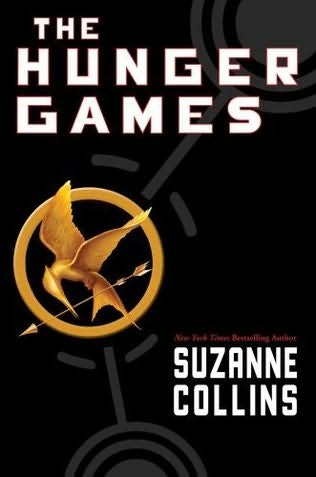
The Hunger Games: Suzanne Collins


I’m not sure when it was that I first heard about Suzanne Collins’ The Hunger Games, but I remember that it was rave reviews. It is a vaguely post-apocalyptic adventure about an inhuman new method of entertainment involving a televised fight to the death. While it is a brutal story, it is an action-packed page-turner filled with charismatic characters, inventive situations, rough violence, young romance, family love, and naïve bravery. In sum, it is awesome.

Collins introduces us to a new world in which the United States has crumbled—literally, in some places. The new country, Panem, is a landmass between what we know now as Appalachia and The Rockies, the ocean coasts having fallen into the sea. Panem consists of thirteen districts and The Capitol. I think of The Capitol as something like 1984’s Big Brother—always trying to keep the citizens in their place by any means necessary; always asserting control. In this new world, each district is responsible for the harvest of a particular resource, which subsequently means the economy of every district is proportionate to their industry. Generally speaking, the districts closest to The Capitol (One, Two, and Three) are most prosperous; in fact The Capitol destroyed District Thirteen in a show of power.

As an illustration of their power over the districts, The Capitol televises an annual event called The Hunger Games, in which each district sends one female child and one male child—known as Tributes—to the Capitol where they will fight each other to the death. Every child must enter their name into the lottery during the ages of twelve through eighteen. The Tributes—a total of twenty-four children—are prepared for the games with trainings, and coached by past game winners. As the Tributes participate in the contest, the public watches and places bets on who will win. Sponsors are invited to make donations to their favorite Tribute so that they may receive much needed gifts during the competition. Overall, the contest is a gory show of ultimate government power and the gross public interest in reality television. No citizen dares speak against The Capitol or The Hunger Games in fear for their life. It makes a reader wonder why anyone would ever choose to have children in such a society.

Our protagonist is a country girl named Katniss Everdeen who lives in the Seam (read, “the ghetto”) of District Twelve. As the coal mining district, D12 is the poorest in the country, filled with under-handed Peacekeepers, illegal hunting, and a profitable black market called The Hob. Since her father’s death, Katniss is the sole supporter of her family, consisting of her mother, her sister Prim, and herself. She spends her days with her friend Gale, hunting illegally in the woods just outside the perimeter of the district. As the primary support for her family, Katniss dreads the idea of being chosen as a Tribute. How would they survive without her? On the day of The Reaping (the name of the lottery), Katniss crosses her fingers that she won’t be picked, only to hear the name of her twelve year old sister called out instead. In a moment of panic and ultimate sacrifice, Katniss volunteers to take her sisters place, winning herself a place in The Hunger Games.

What ensues is a gruesome display of a fight for survival amongst young, desperate citizens who face fame or death. It is essentially a game of instinct, which is something a hunter like Katniss excels as. As coldly instinctual as Katniss is, she manages to form alliances, and even a romance, with a few of her fellow Tributes. Of course, the underlying conflict is that there can only be one winner of The Hunger Games.

Rating: $$$

Friday, February 12, 2010

Schooled: Gordon Korman


I picked up Schooled at my friend’s house while babysitting because it had a bright and interesting cover. A short, young reader novel, Schooled is a modern story of Tarzan for middle schoolers. Capricorn Anderson grew up on a hippie commune with his grandmother, Rain. When Rain takes a fall and is put in the hospital for six weeks, Cap is forced to lived in a suburban home and attend public school as an eighth grader.
The Tarzan parallels are pretty obvious; like Tarzan, Capricorn is taken out of his home habitat and thrust into a totally foreign culture and treated like a freak. In the name of tradition, Capricorn is nominated the eighth grade class president because his peers assume he will make a fool of himself since he is such a total loser. He wears tie dye and has a long mop of blond hair. He practices Tai Chi on the school’s front lawn before class starts. And he’s a total hippie with no contemporary references. Cap doesn’t even realize how different he is. Nor does he understand that being different is the kiss of death in eighth grade.
Of course it wouldn’t be a young reader novel if there wasn’t a really obvious moral. The moral here is that being different can be good. Cap takes on the responsibility of being class president and unites the entire middle school. His reign is not without mistakes, but ultimately, everyone learns an important lesson and they all live happily ever after.
I have to say that I really enjoyed this book. Yes, it’s trite, but it’s a sweet kind of trite. And the characters are really enjoyable. Everyone, at some point in their life, has felt as alien as Capricorn in a public school, but we survive. We make our own way and create our own niche, which is a crucial piece of information for middle school readers.

Rating: $$

Wednesday, February 10, 2010

The Lovely Bones: Alice Sebold


When The Lovely Bones first hit bookstores a few years ago, I was curious about it, but ultimately decided to skip it. As a general rule I don’t go in for a lot of gore, so reading about the rape and murder of a teenage girl wasn’t the least bit appealing. However, in my spare time I’m also a movie buff. So when I saw that The Lovely Bones was going to be made into a movie (with Stanley Tucci!), I bit the bullet and ordered myself a copy. My overall opinion is that I wasn’t missing much by not reading it.


The Lovely Bones is disturbing and gory. Which are actually testaments to the great writing of Alice Sebold. I’m just not sure it’s a great book. The story was sometimes uncomfortable to read. And rather than be about the search for Susie Salmon’s killer, it’s about what happens to a family and community after the death of a young girl, which was only interesting for about a hundred pages. The family reaction was fairly cliché—the parents grow distanced when one of them becomes obsessed with finding Susie’s killer. Her siblings fall into the shadows as the sad survivors of a family torn apart by the loss of a child. And Susie’s friends from school react by finding solace in each other, which feels a little uncomfortable in itself.

I think that what makes this story silver-screen-worthy is that it’s believable. We have become all-too-familiar with the reality of the neighborhood sociopath who preys on our children. What Sebold has managed is to make Susie’s killer dimensional. He is cold and calculating, but she gives him thought processes and determined decisions that effectively bring him to life. If it weren’t for Sebold’s writing skill, I don’t think this book would have made it beyond the thrillers section into the best-selling shelves it stands on today.

Rating: $$

Monday, February 8, 2010

Dinner With A Perfect Stranger: David Gregory


Would you respond to an invitation for dinner with Jesus? Would you ask tough questions? What would it take to convince you that you were dining with the son of God?


In Dinner With A Perfect Stranger, Nick Cominsky receives an invitation for dinner with Jesus of Nazareth at a high class restaurant. His initial reaction is one most of us would share—disbelief. He assumes some of his buddies are up to a gag, but he’s curious about the punch line so he shows up for dinner. Instead of being seated across from a thirty-three year old man with a shaggy beard and long robes and sandals, a man in a blue suit with neatly trimmed hair introduces himself as “Jesus. My family called me Yeshua.” Scanning the restaurant for his friends, or maybe the cameras, Nick struggles to take the man seriously. He instinctively asks for proof in a hilarious exchange in which Nick asks Jesus to turn his wine back into water. Not without a sense of humor, Jesus calls the waiter over and asks for a glass of water to replace his friend’s wine. Calling back his wine, Nick agrees to Jesus’ suggestion of suspending his disbelief for awhile.


Throughout the four course meal, Nick and Jesus discuss everything from world religions, family, and even the realities of heaven. Nick seems to be a non-religious guy who took some religion courses in college, so while he doesn’t necessarily believe in religion, he is able to talk about with some knowledge. I personally had some trouble with some of the statements that Jesus makes during dinner. He says that there is no path to God because the reality is that through sin we are separate from God. That’s a hard line to swallow if I’m to turn around and believe that good faith will earn my forgiveness. Jesus talks about God as being ultimately Just, so we can’t actually earn our forgiveness. We are only forgiven by the sacrifice of His Son…which Jesus wants us to believe was actually God himself.


This was a super fast read, and it was pretty entertaining to react along with Nick Cominsky through the course of conversation. I don’t usually read religious writings because I have a tendency to become aggravated at some of the statements that are made. This little novel was inoffensive and fun. I will warn some of my readers that this novel doesn’t leave a lot of room for religions outside of Christianity.

Friday, January 22, 2010

Best Friends Forever: Jennifer Weiner


There’s a saying that goes, “A friend helps you move, a best friend helps you move a body.” That is the kind of friendship that Jennifer Weiner writes about in Best Friends Forever. Despite the distance of years, best friends Addie and Valerie are reunited under suspicious circumstances and are willing to revisit their friendship and save each other.

Addie Downs is a fat little girl with a strong inclination to stay at home with her family. She’s not much interested in doing the things that other little girls like to do, and she thinks her family is the best. She’s an outcast at school, but she doesn’t mind, or even really seem to notice. When Valerie Addler moves in next door, Addie’s mother forces her to make friends with the new girl. Val is everything that Addie is not--namely, social. They become best friends, inseparable. Val’s mother is a little flaky, but she is adventurous and exciting in ways that Addie’s mother could never be. While Addie is  envious of Val’s eccentric, boozy mom, Val is hateful jealous of Addie’s four person family, with a dad  who comes home every day, a mom  who loves with her whole heart, and a brother who seems just about perfect in every way. However, things change over time, as they are apt to do, and Valerie grows out of her awkwardness and blossoms into a beautiful blond bombshell, joining the cheerleading team, and partying with the popular high school kids. Addie misses her friend more than anything, but isn’t willing to endure the social pressures of her peers. As Addie becomes ridiculed by the very people Valerie now hangs out with, their friendship becomes strained. Then one night at a party, Valerie is raped by one of the school’s most popular jocks, and confiding in Addie, begs her not to tell. When Addie does expose the truth, Valerie denies it and the entire school turns again Fat Addie. The rest of her high school years are spent in misery.

Fast forward fifteen years, and Valerie has become a weather girl, still a blond bombshell. Addie has become an artist, and has lost all of her extra weight. She’s not exactly successful by societal standards, but she’s happy in her life. The night of the fifteen year high school reunion comes around and Addie chooses to go on a date rather than face the kids who hated her in high school. After the terrible date finally ends, Addie heads home and soon finds Val on her doorstep, claiming she has run over and possibly killed the boy who raped her in high school. Addie, ever desperate to have her best friend back, goes along with Val’s plan to find the body and cover up the mess. When no body shows up, the only logical thing to do is run.

Weiner is a very likable author. She creates characters who are very relatable and puts them in situations that are like a more Technicolor real life—aka, more exaggerated. I enjoyed the characters of Addie and Val, maybe because they remind me so much of me and my best friend in high school. Except that I was never that shy; I was far more social than Addie Downs was. However, it’s not hard to believe that best friends could be ripped apart by the social pressures of high school. It’s also not hard to believe that once you’ve been best friends with a person and shared with them the deepest secrets of yourself, you’re linked forever.

Despite having some fairly heavy elements, this book was a really fun read. It was playful and funny, and a trademark chick lit volume from Jennifer Weiner.

Overall Rating: $$

Sunday, January 17, 2010

The Thief Lord: Cornelia Funke


Prosper and Boniface (Bo) are brothers who have run away to Venice. After the death of their parents, greedy aunt Esther offered to adopt the adorably angelic Bo, but wanted nothing to do with the slightly older Prosper. Refusing to be separated, the boys run away to Venice—a city their mother frequently spoke of as wonderful and magical. They are soon adopted into a group of other street children who are living in an abandoned movie theatre. They live off their wits and the money they earn by selling loot that the Thief Lord steals from the grand houses of Venice. When the Thief Lord is asked to take on a special mission of thievery, his own secrets are brought to light, and the band of runaways may never be the same.

The Thief Lord is an extremely entertaining story, full of mystery and excitement, action and tenacity. Cornelia Funke earned my adoration with her Inkspell novels, and her creative imagination. The story of the Thief Lord is really about Prosper and Bo and their search for a safe and comfortable home. The adventures along the way—starring Scipio, Riccio, Mosca, and Hornet—are a thrill ride, exposing each character as a dimensional individual.

Ultimately, the plot revolves around a magical merry-go-round located on the Isola Segreta—the secret island. The legend says that the merry-go-round will make children into adults, and adults into children. Of course, as a group of young runaways constantly harassed by authorities, the group of children is very interested in finding the merry-go-round and changing themselves into adults as soon as possible. There is a rather heavy-handed moral here that explicitly illustrates that no one should take their age for granted. When a child is turned into an adult, he is at a loss as to what an adult does all day. When an adult is turned into a child, he is frustrated at his inability to be taken seriously. The lesson is laid on pretty thick, but I suppose that’s to be expected in a young adult novel.

Overall, this is a really fun novel. It’s kind of mystical and magical, but it’s also mysterious and intriguing. I think it’s a fun novel for the young and old alike.

Monday, January 11, 2010

Let The Right One In: John Ajvide Lindqvist


Let The Right One In by John Ajvide Lindqvist is a Swedish vampire story. For some reason, that alone captured my interest. This quiet little book was made into a Swedish movie that swept the Tribeca Film Festival and started to pop up in conversations. When I finally picked up my own copy of the book, I was captured by the sentiments of others before me, such as “Absolutely Chilling” (L.A. Banks), and “Sweden’s Stephen King…a classic tale of horror” (Tucson Citizen). With acclaim like that, I knew I was in for a treat!

I have to admit that Let The Right One In is slow to start. There’s a lot of exposition and character development. Which I appreciate, but I kept anticipating the action. The first half of the book is spent developing the characters of Oskar and Eli and fostering their friendship. Oskar is an outcast who is constantly teased by the schoolyard bullies. Eli is the strange new girl who moved in next door, who only comes out at night. While they are becoming friends, there is a “ritual murderer” on the loose, capturing children around twelve years old, and draining their blood. Before too long, Oskar finally figures out what the reader already knew—that the ritual murderer is linked to Eli. There are also an array of other characters (some that never appear in the movie), who pepper the plot with intricate crossovers and relations.

As an English Literature major, I couldn’t help but read the many themes that arise in this novel. I don’t know if Lindqvist was writing an allegory, but it isn’t hard to find one. There are thematic elements of family crisis, effects of ostracism and bullying, the good and bad in everyone. All of this murder and mayhem takes place in a small Stockholm suburb, where the streets and buildings were erected with the purpose of fostering a community and a sense of safety. And of course, all Eli wants is a home where she can stay put, and all Oskar wants is a friend.

There are some truly terrifying scenes described, including the scene in which Eli’s biggest fan, Hakan, returns to her as a disfigured monster and attempts to rape her. Also, when Eli shares with Oskar her memory of becoming vampire, it is gruesome and horrifying and absolutely terrifying that anyone could imagine such a thing. There are also sweet and poignant moments, shared by Eli and Oskar. Theirs is a truly unconditional love, which may well be the entire point to this story. After all, isn’t everyone in this world looking to be loved not for who they are, but in spite of who they are?