Showing posts with label Feminism. Show all posts

Wednesday, September 16, 2009

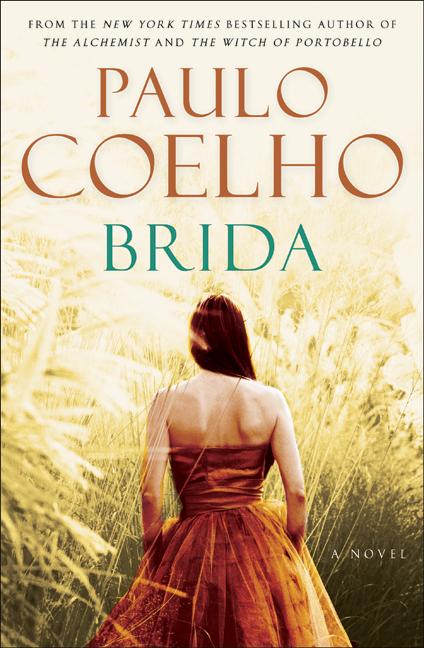
Brida: Paulo Coelho


Paulo Coelho may be one of my favorite authors. His writing is insightful and intense. He writes like a poet about the most ordinary things. In reading some of his previous novels, I have found reason to pause and contemplate. Unfortunately, Brida has given me very little reason to pause.

Brida is an Irish gal who wants to learn about the mysteries of the magical world. First of all, a reader has to suspend their notions of magic and continue with an open mind. Coelho's world of magic is not one of pointed hats, warty noses, spells, and black cats. The world of magic that Brida enters is based on the power of God and Love. Coelho writes about an accessible magic that involves tapping into intuition and the natural forces at work in the world. Readers of Coelho will understand that his writing is based in spirituality and not specific faith.

It's not the spirituality I'm avert to in this novel, but the plot. From a writer who can describe a journey as a worldwide exploration of humanity, comes this somewhat trite novel about soul mates and choices made on the path of life. Whereas I frequently read sentences in Coelho's books that I am impelled to write down and dissect, I found only two such sections in Brida. In short, I expected more enlightenment.

Of all Coelho's works, this has been my least favorite.

Tuesday, September 1, 2009

Candy Girl: Diablo Cody


Before her Juno fame, Diablo Cody was a fairly average working class girl, living in Minneapolis, in a job she didn't much care for, writing on her own time, and generally strolling through life without much aim. And then she became a stripper.

Candy Girl is Cody's memoir of the year she spent in various nudie bars, taking off her clothes and dancing for money. The novella is subtitled "A Year in the Life of an Unlikely Stripper". An innocuous girl in hippie clothing shows up at a seedy dive for amateur night and receives looks of doubt. She stumbles around on stage, unaware of her limbs and is ungraceful as well as uncoordinated. What would most likely end in a single night of unspoken humiliation for most, turns out to be the launch pad for Cody's new career. She fiercely admits that her strange interest in the sex industry is perverse and at one point she even goes into the depths of stripping out of pure curiosity and witnesses how dark and disgusting back room business can be. It's a fascinating journey into a dark secret of society that most of us turn blind eyes to.

Possibly the most fascinating element of this story is Cody's boyfriend. Jonny neither encourages nor discourages her new chosen career. He is steady as a rock, and becomes increasingly curious. He takes pride in his sexy girlfriend, and is there at the end of every night to snuggle her close and listen to her talk about her night at work. He is possibly the most supportive man in written history. Jonny and Diablo are now married and she claims they are the happiest people in all the U.S.A.

Diablo Cody is a fantastic writer. She is the Francesca Lia Block for grown-ups with a crude vocabulary. She is able to write both common and literately. A smart reader will instantly recognize that Cody is well read and well educated. Candy Girl is filled with all of the true-life minutiae of stripping including gross overshares of industry methods. Cody adamantly maintains that stripping was her fantasy choice. Never once does she allow the reader to feel sorry for her, because stripping was something she volunteered for. It's almost empowering, really.

I have a new hero in Diablo Cody. She is smart, witty, and extremely talented. The girl knows how to turn a phrase, that's for sure!

Tuesday, July 21, 2009

The Awakening: Kate Chopin

The Awakening is a touchstone in feminist literature. Chopin was a fantastic writer who was shocked at the reception of this novel, so much so that she stopped publishing. It is the novel of a woman who questions traditional gender rules and commits herself to doing as she likes.
When it was published in 1899, such an idea was appalling to the general public. The Awakening was pulled from the presses and it was banned until after Chopin's death. She was devastated.


Edna is a gentlewoman of twenty-eight years, married with two children. As is custom, she spends her summers at a lovely resort, socializing with other gentlewomen. It is at the resort that she meets Robert, a handsome, doting young man who spends every waking moment catering to Edna's every desire. Edna takes his admiration for granted, thinking nothing of his puppy love. It takes nearly the entire story for Edna to admit to herself that she returns Robert's love--which is socially unacceptable considering her marriage.


This novel has long stood as a standard for the women's movement. Edna is an example of the overly pampered housewife who grows bored with her situation and begins to question her role in life. She takes baby steps towards her liberation; small, seemingly insignificant thought processes that turn Edna into a woman shirking her traditional role and expectations.


I had a really hard time with this novel. There were so many problems with this story. For one thing, I had to overcome the archaic language that includes words like "darkies" and "quadroon". I had to overcome my personal beliefs about the ridiculousness of a housewife requiring the assistance of a nanny (what does a woman do who doesn't work, doesn't clean house, nor does she care for her children?). I then had to overcome the outdated traditions of "calling hours" and making excuses for not being available for said visiting hours. All those things aside, the novel could conceivably take place today. Here is a woman who has bought into the role of wife and mother, who has replaced her own identity with that of wife and mother, who becomes frustrated and begins to question those roles.


I am personally a proponent of questioning societal norms, and I firmly believe that marriage does NOT make a woman the property of her husband. Unfortunately, because of the era, this novel moves slowly and negates much of the process of self discovery through excuses from the husband. Rather than feeling like a cheerleader for Edna, I felt aggravated, anxious for her to stand up and take her life into her own hands with some real Umph!