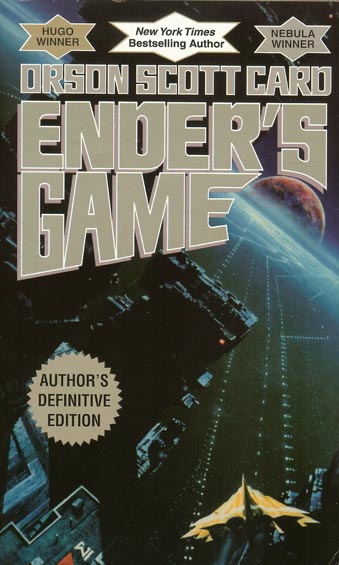
Orson Scott Card has a knack for writing about different planes of time. Most known for his Ender’s Game series, Card writes about a differently imagined future or past in an accessible way that feels less like sci-fi, more like philosophy.
Seventh Son is an alternate historical fiction, meaning it’s written about an imagined history. One in which the folk magic of early settlers of America is widely popular. Families protect their homes with hexes and some individuals are believed to have special gifts. It is also a time when the seventh son of a seventh son is believed to hold great power and is revered for his status in the family. Alvin Junior is such a son.
Al Junior was born to the Miller family, and at the moment of his birth, it is obvious that he is a special child. His family dotes on him and respects his natural abilities. However, there is a dark force hovering at the edges of Al Junior’s life, waiting for the opportunity to take the child out of the world where he will do so much good. It is a traveling story teller named Taleswapper who helps Al Junior understand what he is and what his purpose will be. He is the sole Maker who can battle the Unmaker and help move a new country into the future.
Card has presented a story that is mystical and magical, but also theological. There is an inherent battle of good and evil at play in this novel that the reader will unwittingly take part in. Al Junior is a vulnerable character that instantly earns sympathy, and it his protection at the center of this novel.
Seventh Son is an alternate historical fiction, meaning it’s written about an imagined history. One in which the folk magic of early settlers of America is widely popular. Families protect their homes with hexes and some individuals are believed to have special gifts. It is also a time when the seventh son of a seventh son is believed to hold great power and is revered for his status in the family. Alvin Junior is such a son.
Al Junior was born to the Miller family, and at the moment of his birth, it is obvious that he is a special child. His family dotes on him and respects his natural abilities. However, there is a dark force hovering at the edges of Al Junior’s life, waiting for the opportunity to take the child out of the world where he will do so much good. It is a traveling story teller named Taleswapper who helps Al Junior understand what he is and what his purpose will be. He is the sole Maker who can battle the Unmaker and help move a new country into the future.
Card has presented a story that is mystical and magical, but also theological. There is an inherent battle of good and evil at play in this novel that the reader will unwittingly take part in. Al Junior is a vulnerable character that instantly earns sympathy, and it his protection at the center of this novel.